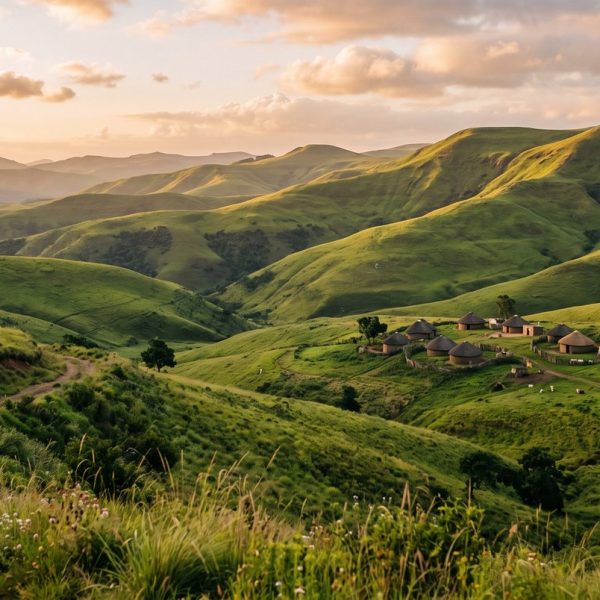
South Africa is famous for its landscapes and wildlife, but its most fascinating treasure might be its incredible linguistic diversity. With 11 official languages and dozens of regional tongues and dialects, it’s a country where language is not just a tool for communication, but a living record of history, culture, and identity. From city streets to rural villages, every conversation carries stories of migration, resistance, innovation, and cultural pride.
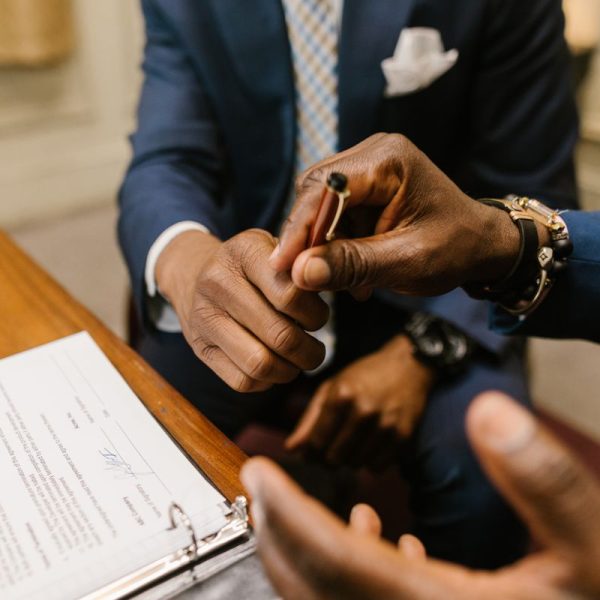
This rich tapestry of languages also makes communication – especially across official, legal, and business contexts – surprisingly complex. Whether it’s a birth certificate in isiZulu, a contract in Afrikaans, or academic records in Setswana, navigating multilingual documentation calls for expert support. That’s where professional certified document translation services become vital for individuals, companies, and institutions working across South Africa’s many linguistic borders.
1. South Africa’s 11 Official Languages – And Why That Number Is Misleading
South Africa officially recognizes 11 languages: Afrikaans, English, isiNdebele, isiXhosa, isiZulu, Sesotho, Setswana, Siswati, Tshivenda, Xitsonga, and Sepedi (Northern Sotho). On paper, this looks like a complete inventory, but it hides an even richer reality. Beyond these 11 are many more linguistic varieties – from regional dialects and minority tongues to urban hybrids – that do not always appear in censuses or on government forms but shape everyday life just as strongly.
Even within a single “language,” variation can be enormous. IsiXhosa spoken in the Eastern Cape differs in vocabulary and rhythm from urban isiXhosa in Johannesburg. Setswana used in formal broadcasts may sound quite different from the Setswana of village conversations. Treating each official language as a single, uniform system erases a network of subtle local identities and histories that live in pronunciation, word choice, and expressions.
2. English Is Powerful – But Not Dominant Everywhere
English is the language of national business, higher education, and much of the media, which makes many visitors assume it’s dominant across the country. In reality, it is a minority home language. Most South Africans grow up speaking one or more African languages, then acquire English later through school and public life. This creates a population that’s often highly multilingual, but with emotional and cultural roots elsewhere.
In some rural provinces, African languages are still the default for public announcements, church services, community meetings, and local markets. In urban spaces, English functions as a bridge, but people may switch to isiZulu, isiXhosa, Sesotho, or Afrikaans to express nuance, humor, or intimacy that doesn’t come across in English. The result is a layered kind of communication where English carries power, but other languages carry depth.
3. The Click Consonants: Ancient Sounds with Modern Power
The most striking feature for many listeners is the presence of click consonants in languages like isiXhosa, isiZulu, and isiNdebele. These clicks – written with letters such as c, q, and x – can function as fully meaningful sounds, not just decorative or occasional effects. Each click has different pronunciations and combinations, forming part of a complex and ancient sound system.
The story behind these clicks traces back to contact with Khoisan languages, some of the world’s oldest and most phonetically intricate tongues. Over centuries, neighboring Bantu languages absorbed and adapted these sounds, blending them into their own structures. Today, the clicks are both a symbol of cultural identity and a reminder of deep pre-colonial histories of exchange and coexistence in southern Africa.
4. Afrikaans: A Language of Encounter, Not Just Colonization
Afrikaans is often framed purely as a colonial language, but its origins are far more complex. It developed primarily from Dutch dialects brought by European settlers, yet it was profoundly shaped by Malay, Portuguese, Khoisan languages, and several African tongues spoken by enslaved people and indigenous communities. The result is a creolized, localized language that grew out of intense contact between very different groups.
Historically, Afrikaans was weaponized as a tool of apartheid power, which left deep emotional scars. At the same time, it is the mother tongue of diverse communities, including many people of mixed and African ancestry. Its vocabulary still carries traces of these intertwined roots, revealing centuries of social interaction – both violent and creative – that a simple colonial label cannot capture.
5. “Tsotsitaal”, “Isicamtho” and Other Urban Street Codes
South Africa’s townships and cities have produced fascinating urban speech styles such as Tsotsitaal, Isicamtho, and other slang-rich mixes. These are not just random blends of English, Afrikaans, and African languages; they are coded systems with internal rules, used to signal belonging, youth identity, and resistance to authority. Vocabulary shifts rapidly, and meanings can be opaque even to fluent speakers of the source languages.
These codes emerged in contexts of policing, segregation, and survival. By speaking in ways that outsiders struggled to decode, young people could create safe verbal spaces and flexible identities. Today, elements of these varieties have moved into music, advertising, social media, and everyday talk, showing how marginalized speech styles can become powerful engines of cultural innovation.
6. Code-Switching as a Daily Art Form
In many parts of the world, switching between languages in the same sentence is seen as a sign of confusion or lack of fluency. In South Africa, it is often a mark of skill. People effortlessly weave together English, Afrikaans, isiZulu, Setswana, or other languages to adjust tone, show respect, or add humor. A greeting may start in English, shift to isiZulu for warmth, then dip into township slang for a joke.
This constant linguistic negotiation allows speakers to navigate social hierarchies, age differences, and cultural expectations. It also means that the “real” message of a conversation often lies not only in what is said but in which language is chosen at each moment. To an outsider, the mix may seem chaotic; to insiders, it is a finely tuned performance of identity.
7. Language as a Tool of Healing and Inclusion
After 1994, the recognition of multiple official languages was not just a symbolic gesture; it was part of a broader effort to restore dignity to communities whose languages had long been suppressed or marginalized. Translating government documents, court proceedings, and public information into African languages is central to this project, but implementation has been uneven and often under-resourced.
At the same time, there has been a renewed push for mother-tongue education, arts, and literature in African languages. Writers, musicians, and filmmakers increasingly choose to create in their home languages or in hybrids, asserting that serious thought and sophisticated creativity do not belong to English alone. This shift underscores the idea that language rights are inseparable from cultural and psychological healing.
8. The Future: Digital Spaces and New Hybrids
As more South Africans move online, their languages are reshaping the digital landscape. Social media posts blend abbreviations, emojis, township slang, and formal language in constantly evolving combinations. Spellings get standardized (or playfully destabilized), new words are coined, and marginalized languages gain visibility in memes, podcasts, and YouTube content.
Meanwhile, technology – from predictive text to speech recognition – is racing to catch up. Tools trained only on English or formal varieties of other languages struggle with the rich mix found in real conversations. The next frontier in technology and communication will depend on tools that can handle not just multiple languages, but the fluid, hybrid ways South Africans actually speak and write every day.
Listening Closer to South Africa’s Voices
Beneath official categories and census labels, South Africa’s linguistic life is dynamic, creative, and deeply tied to questions of power, belonging, and memory. The country’s languages carry echoes of ancient sound systems, forced migrations, resistance movements, and modern urban innovation. To understand South Africa, it is not enough to know that it has 11 official languages; one must listen closely to how people shift, blend, and reinvent those languages in real life.
For individuals, businesses, and institutions engaging with this multilingual reality, sensitivity to language is more than a courtesy – it is a necessity. Whether through everyday conversations or formal translations of vital documents, treating each language with care and respect opens doors to deeper trust, clearer communication, and more meaningful collaboration across a society built on many voices.